Is Jiu Jitsu Good Exercise? A Practical Answer
 By JP Perron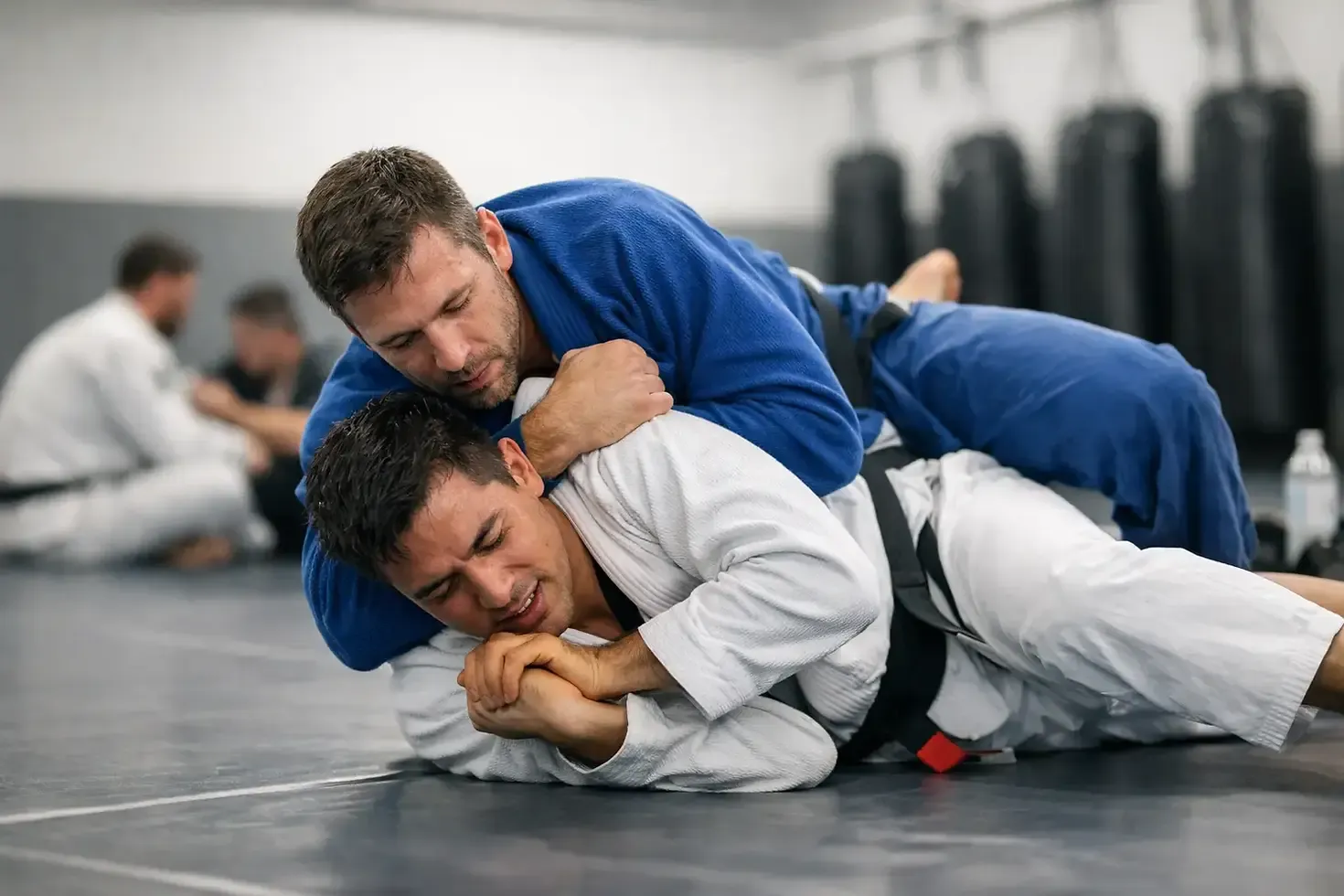
A hard round of Jiu-Jitsu does not feel like time on a treadmill. You are gripping, moving, balancing, defending, getting back to your feet, and thinking under pressure. So, is jiu jitsu good exercise? For most people, absolutely - especially when they want fitness that carries into daily life rather than a workout that ends when the timer stops.
Traditional Jiu-Jitsu asks the whole body to work together. It develops strength, cardiovascular conditioning, mobility, coordination, and mental composure at the same time. The result is not simply being tired after class. It is becoming more capable, more disciplined, and more prepared.
## Is Jiu Jitsu Good Exercise for Full-Body Fitness?
Yes, but it is not a one-size-fits-all answer. The quality of the exercise depends on how consistently you train, the structure of the class, your current fitness level, and whether your instructor teaches with control and purpose.
A well-run Jiu-Jitsu class is full-body work. Throws, breakfalls, joint-control drills, ground movement, escapes, and partner practice require your legs, hips, back, shoulders, arms, and core to contribute. You do not isolate one muscle group and call it a day. You learn to connect your body as a unit.
That matters beyond the dojo. Carrying groceries, getting up from the ground, maintaining balance on uneven terrain, or reacting when someone pulls or pushes you all require coordinated strength. Jiu-Jitsu builds fitness that has a job to do.
It also trains your heart and lungs in a different way than steady-state cardio. Drilling may involve short bursts of effort followed by brief recovery. Controlled partner training can raise the intensity quickly, then demand that you slow your breathing and regain focus. This type of conditioning is valuable for adults who want functional stamina and for teens who need a productive physical outlet.
## The Fitness Benefits You Can Expect
### Strength That Comes From Movement
Jiu-Jitsu develops practical strength through pushing, pulling, gripping, lifting, bracing, and changing levels. Your core works constantly because it must stabilize you while you move with or against a partner. Your legs build strength through stances, takedown entries, transitions, and the simple work of standing back up repeatedly.
This is not the same as a dedicated weightlifting program, and it should not be presented as a replacement for one in every case. If your goal is maximum muscle size or a specific powerlifting total, resistance training should remain part of your plan. But Jiu-Jitsu can build meaningful strength for people who would rather earn it through skill-based training than count repetitions alone.
### Conditioning Without Mindless Repetition
Many people struggle to stay consistent with exercise because they are bored. They know they should move, but the routine does not hold their attention. Jiu-Jitsu gives you a reason to work hard: you are learning a technique, solving a problem, and improving your ability to protect yourself.
That mental engagement helps. A class can pass quickly because every drill presents a new challenge. You are not only asking, “Can I keep going?” You are asking, “Can I stay calm, use the right position, and make a good decision?”
### Mobility, Balance, and Body Awareness
Controlled Jiu-Jitsu training asks you to bend, rotate, lower your base, shift your weight, and move safely on the ground. Over time, this can improve body awareness and usable mobility. Students often notice better balance, stronger posture, and greater confidence in how they move.
The word “controlled” is important. Mobility improves when training is taught progressively and students learn proper alignment. Forcing a range of motion, treating every partner like an opponent, or ignoring discomfort is not disciplined training. Good martial arts instruction respects the body while steadily challenging it.
### Stress Relief With a Purpose
A demanding class can clear the noise from a long day. The work requires your attention, which gives your mind less room to replay stress. Physical exertion also creates a healthy outlet for built-up energy and frustration.
But Jiu-Jitsu offers more than temporary release. It teaches composure. When a drill becomes difficult, students practice breathing, staying present, and responding with technique instead of panic. That habit can serve a person in family life, work, school, and moments of real pressure.
## Exercise Is Only One Part of the Value
If someone only wants to burn calories, there are many ways to do it. Walking, cycling, strength training, and team sports can all be excellent choices. Jiu-Jitsu stands apart because it builds fitness alongside judgment, humility, and practical awareness.
Traditional training teaches students to respect training partners, follow instruction, and control their actions. You cannot develop well in an ego-driven room where people treat every class as a fight. The best progress happens in a structured environment where people work hard, protect one another, and understand that technique comes before force.
For children, this can mean [improved focus, better listening habits](/blog/10-discipline-activities-for-kids-that-work), and confidence that is not dependent on being loud or aggressive. For teens, it can provide structure during years when discipline and belonging matter deeply. For adults, it is a chance to train the body while developing calm, real-world self-protection skills.
For [frontline professionals](/first-responders-self-defense), the benefits may be even more direct. Positional control, balance, decision-making, and restraint are not abstract concepts. They are skills that require repeated, responsible practice.
## What Jiu-Jitsu Does Not Replace
Jiu-Jitsu is excellent exercise, but honest training includes honest limits. It is not automatically the best answer for every fitness need.
If you are preparing for a marathon, you will need focused running. If you want to build substantial muscle or improve bone density, strength training should be part of your routine. If you are returning from an injury, you may need clearance and guidance from a qualified health professional before joining a regular class.
It is also wise to pay attention to recovery. Beginners sometimes arrive highly motivated and try to train at maximum intensity immediately. That is how unnecessary aches become setbacks. Start at a sustainable pace, learn to tap early, communicate with your instructor, hydrate, and give your body time to adapt.
The goal is not to prove toughness in your first week. The goal is to become stronger and more capable over months and years.
## How Often Should You Train?
For many beginners, two classes per week is an excellent starting point. It provides enough repetition to build familiarity while allowing time for recovery. One class per week can still be worthwhile, especially for busy families or adults rebuilding a fitness habit, but progress will naturally be slower.
As your conditioning improves, three weekly sessions can create noticeable gains in endurance, skill, and confidence. The right schedule is the one you can maintain. Consistency beats the occasional burst of extreme effort.
Outside class, simple habits support your progress: walk regularly, sleep well, eat enough protein and whole foods, and add basic strength work if it fits your goals. You do not need a perfect lifestyle before beginning. Training can be the structure that helps you build one.
## Choosing the Right Place to Train
The experience depends heavily on the school. Look for a dojo where beginners are welcomed, safety is taken seriously, and instructors can explain why a technique works. A strong program should challenge students without humiliating them.
Ask whether the training includes practical self-defense context, not only competition rules. Ask how students are taught to manage intensity and how children or newcomers are matched with partners. Watch the culture. Respect, control, and accountability should be visible on the mat.
At Vanguard Academy, [traditional Japanese Jiu-Jitsu](/adult-jiu-jitsu) is taught through a modern, real-world self-protection framework. Students in Chesterville and the surrounding community train with clear standards, practical purpose, and an ego-free approach to improvement.
You do not need to arrive in shape to begin. You need the willingness to learn, the discipline to return, and the humility to take one step at a time. A good class will meet you where you are, then help you build the strength and confidence to go further.