How Self Defense Improves Awareness Daily
 By JP Perron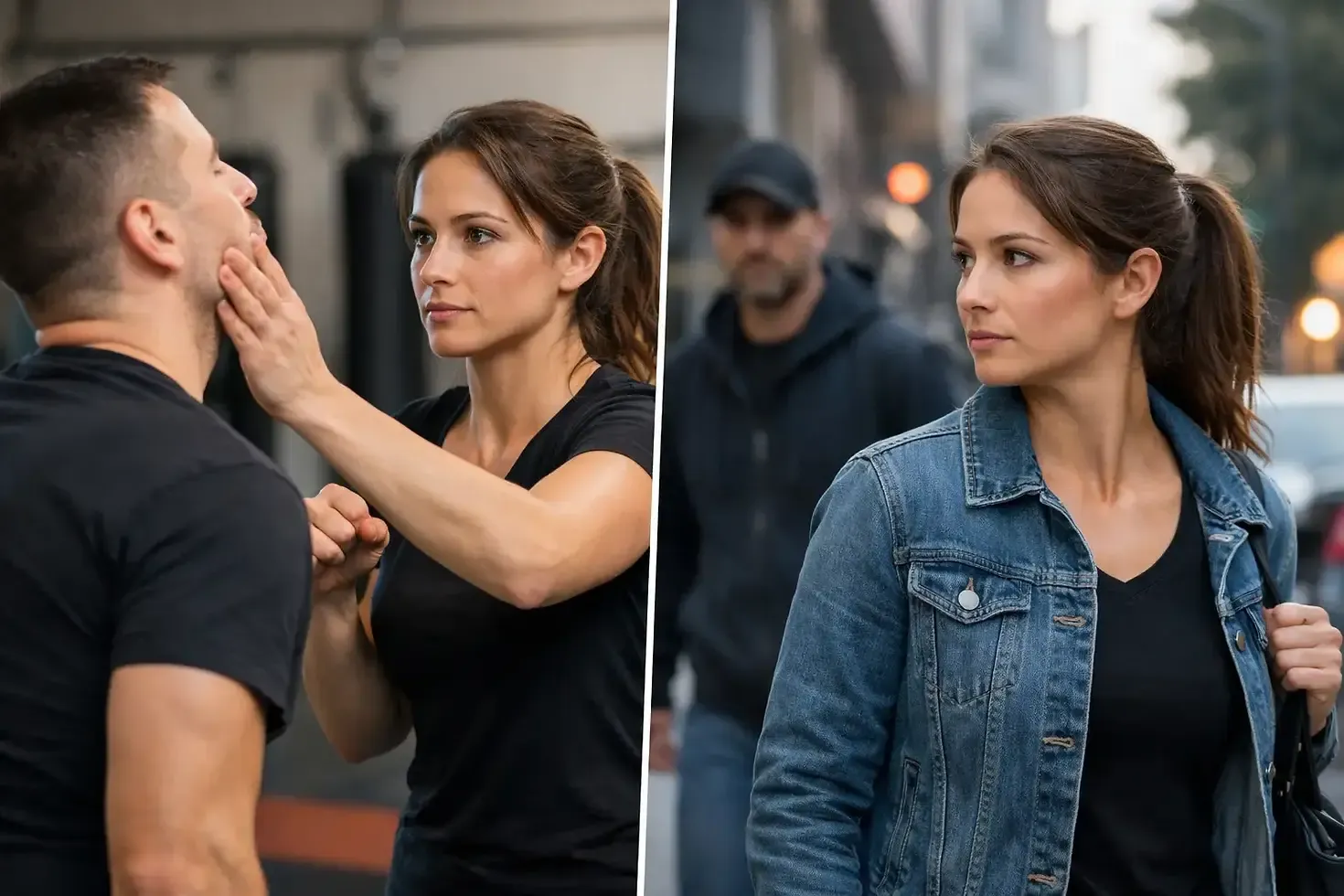
A person rarely gets more time to make a decision when something feels wrong. They get the few seconds they have. That is why learning **how self defense improves awareness** matters long before anyone needs to block, escape, or call for help. Good training teaches people to notice more, think more clearly, and make safer choices without living in fear.
Awareness is not paranoia. It is the calm habit of paying attention to your environment, your position, and the behavior around you. For children walking home, teens spending time with friends, adults returning to a parking lot after work, or frontline professionals managing tense encounters, that habit can be one of the most practical forms of protection.
## How Self Defense Improves Awareness Before Conflict Starts
Many people think self-defense begins when physical contact happens. In reality, physical defense is often the last option. The stronger goal is to recognize concern early, create distance, set a boundary, and leave safely when possible.
Structured training changes what students look for. Instead of moving through public spaces with their attention fixed on a phone, they begin to [identify entrances, exits](/blog), isolated areas, obstacles, and the people nearby. They learn that their hands should be available, their body should be balanced, and their movement should leave them room to react.
This is not about judging every stranger as a threat. It is about noticing behavior and context. Someone standing too close after being asked for space, a person blocking a path, an argument escalating around a group, or a vehicle that seems out of place may deserve more attention than usual. Awareness gives a person time to make a simple, sensible adjustment: cross the street, move toward other people, return to a store, or contact someone for help.
That time matters. Distance and positioning are often more valuable than a complicated technique.
### Training teaches the difference between discomfort and danger
Our instincts often send signals before our minds have organized the details. A child may feel uneasy about an adult who ignores a boundary. A teen may sense that a gathering is turning reckless. An adult may notice someone following too closely in a parking lot.
Self-defense training gives those feelings useful structure. Students learn to pause and assess: What is happening? Where is the nearest exit? Who can I ask for help? Is this person respecting my words and space? Do I need to leave now?
The answer is not always dramatic. Sometimes a situation is merely awkward, and a calm conversation is enough. Sometimes it is clearly unsafe, and leaving immediately is the right decision. Training does not promise perfect judgment, but it helps people respond with more purpose instead of freezing, dismissing their instincts, or reacting emotionally.
## Awareness Is a Physical Skill, Not Just a Mindset
A person can understand safety principles and still struggle to use them under pressure. Stress changes posture, breathing, attention, and decision-making. That is where martial arts practice becomes valuable.
Traditional Jiu-Jitsu develops body control through stance, movement, balance, breakfalls, controlled contact, and disciplined repetition. When those skills are taught through a real-world self-protection framework, students also learn why position matters. They see how quickly balance can be lost when someone grabs clothing, crowds personal space, or pushes from an unexpected angle.
As physical confidence grows, students are more likely to carry themselves with calm intention. Their head is up. Their hands are free. Their footing is stable. They are less likely to panic if someone bumps into them or speaks aggressively. That does not make them invincible, and it should never make them careless. It simply means they have practiced staying composed when their body wants to rush into fear.
### Drills build attention under pressure
Useful self-defense classes do more than teach a sequence of moves. They create controlled moments of uncertainty. A student may need to recognize a verbal cue, respond to a boundary violation, move around an obstacle, or choose whether to disengage, create distance, or seek help.
The details should match the student. A young child needs simple, [age-appropriate lessons](/kids-teens): stay with trusted adults, use a strong voice, understand safe versus unsafe secrets, and find help quickly. A teen may need practice handling peer pressure, online contact that moves into the real world, or unsafe party situations. Adults may focus on parking lots, workplaces, travel, and protecting family members. [First responders](/first-responders-self-defense) may require decision-making skills shaped by the demands of their role.
The common thread is repetition. When students repeatedly scan, move, speak, and choose under supervised pressure, awareness becomes less theoretical. It becomes behavior.
## Verbal Boundaries Sharpen Situational Awareness
Awareness is not silent observation alone. It also includes knowing when to communicate clearly.
A firm voice can reveal a great deal about another person's intentions. Someone who respects a direct statement such as, “Stop. Give me space,” may step back. Someone who ignores it, mocks it, or closes distance further is providing important information. Students who train verbal boundaries learn to notice that information without getting drawn into an argument.
This is especially valuable for children and teens, who are often taught to be polite even when they feel uncomfortable. Respect matters, but personal safety matters too. A child should know that it is acceptable to say no, move away, make noise, and seek a trusted adult. A teenager should understand that confidence is not proving toughness or winning a confrontation. Confidence is choosing a safe exit, even if friends call it uncool.
For adults, verbal skills can prevent ego from turning a minor conflict into a serious one. Self-defense is not about having the last word. It is about getting home safely.
## The Confidence Effect: Calm, Not Complacent
One of the most meaningful benefits of training is a quieter kind of confidence. Students who understand their capabilities are often less reactive. They do not need to posture, escalate, or test themselves against others. They know that avoidance is a strength, not a weakness.
This matters at home as much as it does in public. Parents may notice that a child becomes more focused, more willing to speak up, and better able to manage frustration. Teens may become more comfortable setting limits with peers. Adults may feel less overwhelmed in unfamiliar settings because they have a basic process: observe, position, communicate, leave if possible, and use physical defense only when necessary.
There is a trade-off worth recognizing. Greater awareness can make people notice risks they previously ignored, which can feel uncomfortable at first. The answer is not to become hypervigilant. Strong training pairs awareness with emotional control. Students learn to observe without assuming, prepare without obsessing, and act without panic.
## Building Awareness Beyond the Dojo
The best safety habits are simple enough to use every day. Families can practice them naturally without making life feel restrictive. Before entering a new place, identify where you would go if you needed help. When walking to a car, put the phone away until you are inside. Teach children a clear family plan for getting separated in a public place. Encourage teens to share plans, charge their phones, and trust the friend who says, “Let’s leave.”
Awareness also grows through conversations. Ask children what they would do if they felt uncomfortable at a store, park, or friend's house. Ask teens what safe transportation looks like when plans change. Discuss the difference between being alert and being afraid. These conversations work best when they are calm, regular, and free of lectures.
At Vanguard Academy, the goal is not to create fearful people who expect conflict. It is to develop disciplined people who understand their surroundings, respect others, and have the skills to protect themselves if avoidance is no longer possible.
Real awareness begins with a decision to be present. Keep your eyes up, trust the details that do not feel right, and give yourself permission to choose safety early. That is a skill worth practicing for life.